



Tools do not fail all at once. They give small signals first – a compressor that takes longer to build pressure, a blade that starts to tear instead of cut, a grinder that runs hot – and every one of those signals is cheaper to fix early than to replace late.
That is what this roundup is actually about. Not a list of shiny tools, but the six pieces of equipment that turn up in almost every home workshop, garage or maintenance corner, and the care each one needs to keep working.
Each section below covers what the equipment does, the mistakes that shorten its life, and the checks worth making before you start a job rather than after something goes wrong.
At A Glance: The Six Picks In One List
- Impact wrenches and torque – the spec that decides whether a fastener is tightened correctly or merely tightened hard.
- Air compressors – the workhorse of any workshop, and the one machine where oil changes decide longevity.
- Knives and sharpening – the cheapest tool to replace and the easiest to ruin by ignoring the edge.
- Angle grinders – fast, useful and the most common cause of workshop injuries when handled carelessly.
- Machine polishing – how long a proper correction takes, and why rushing it costs more than it saves.
- CNC and NC machining – what actually changes when a job moves from manual control to programmed control.
How We Chose These Tools
- Maintenance reality, not spec sheets. A tool that cannot be serviced by its owner will be serviced by nobody.
- Safety that is built in. Guards, stops and sensible defaults count for more than extra speed.
- Parts and consumable availability. Blades, belts and seals are what stop a good tool being used.
- Control of the result. The best tool is the one that lets you repeat the same job twice with the same outcome.
1. Impact Wrenches: Getting Torque Right Instead Of Just Tight
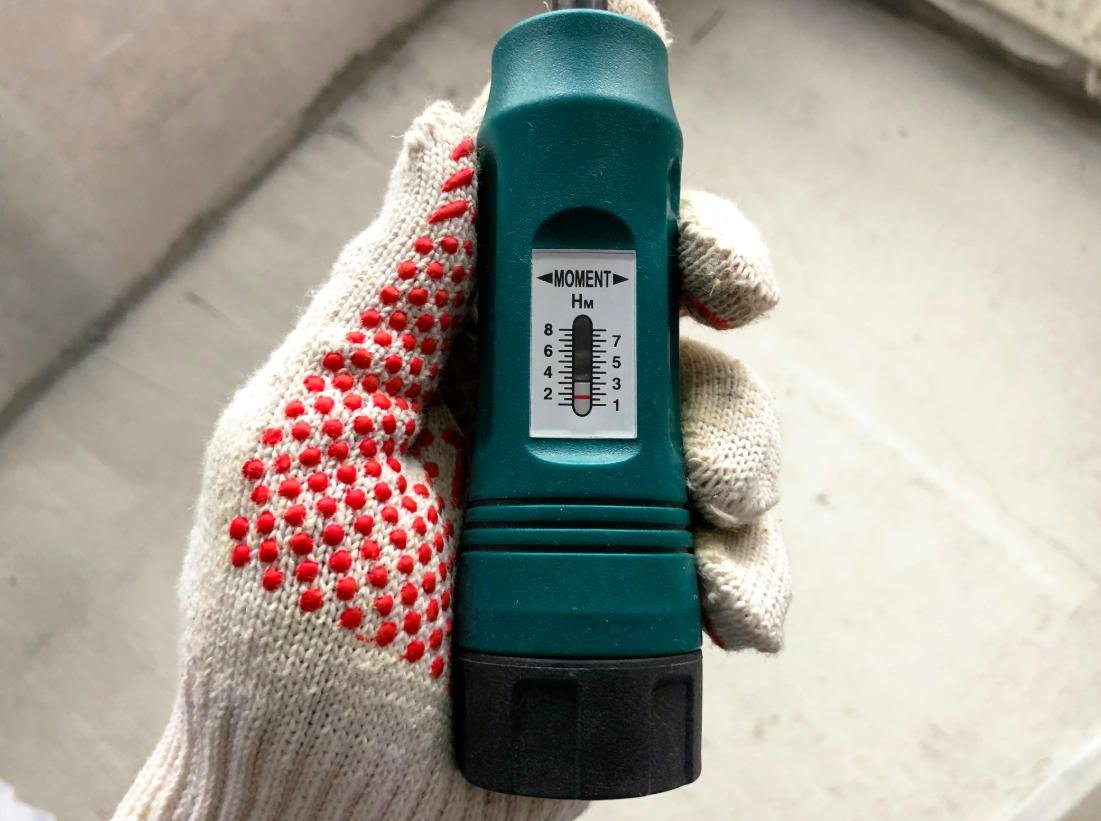
Impact wrenches are often judged by how fast they break a nut loose, but the number that actually matters is torque. The digital multimeter shown here is the kind of tool used to check what a machine is drawing, which is a reasonable way to understand whether a wrench is being asked to do more than it should.
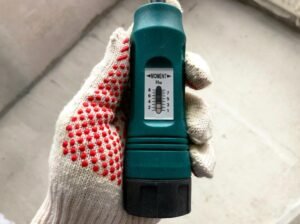
- Torque is the real specification. The number on the tool sets how it behaves, and the correct figure comes from the fastener rather than from the wrench.
- Impact action loosens, the drive tightens. Impact wrenches are for high-speed loosening; final tightening at a set torque needs a torque wrench.
- Check the draw. A meter reading tells you whether the tool is being fed the air or power it expects.
- Pros: Removes stubborn fasteners in seconds; the click-type and digital approaches make the setting repeatable.
- Low effort for the operator compared with a hand tool.
- Torque settings make the result repeatable across a whole batch of fasteners.
- Cons: Impacts can round bolt heads and strip threads if used as a final step.
- Impact wrenches are not torque wrenches and cannot be used to guarantee a torque value.
- Noise and stored energy make ear and eye protection non-negotiable.
Use it to break fasteners free and to do the work, then finish with the tool that can actually measure the result.
2. Air Compressors: The Machine That Rewards Maintenance
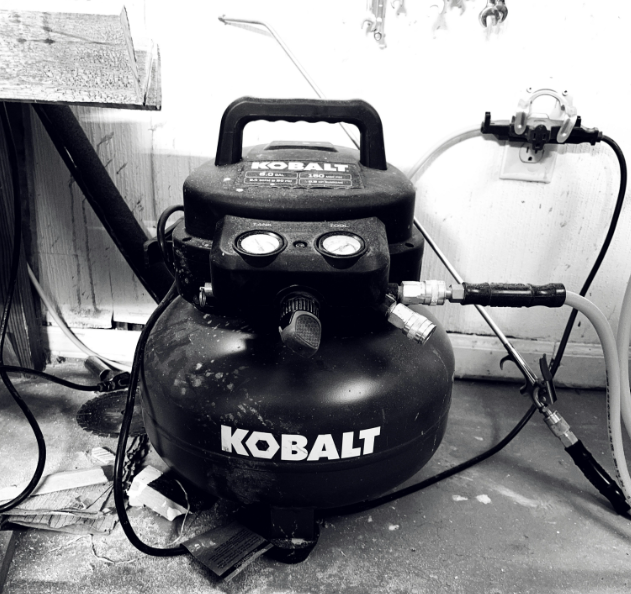
The compressor is the piece of equipment most workshops rely on and least often service. The tank-and-wheeled unit pictured here, with its gauge, handle and coiled hose, is a typical portable compressor – and the one machine in the workshop where a small, regular task decides whether it lasts five years or twenty.
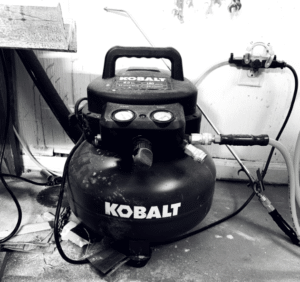
- Oil level and change interval. Compressors run hot and lubricate continuously; dirty oil is what turns a pump into a repair bill.
- Drain the tank regularly. Moisture collects at the bottom of the tank and will not leave on its own.
- Watch the pressure switch and belt. Both are cheap to replace and both cause the classic “it will not build pressure” complaint.
- Pros: Compressed air is far more flexible than a pile of power tools; hose and fittings let you reach any point in the workshop.
- Serviceable – most parts are replaceable without specialist tools.
- One machine can run several pneumatic tools in turn.
- Cons: Continuous running is noisy and draws real power.
- Oil changes are easy to postpone and hard to undo once skipped.
- Air tools need their own maintenance on top of the compressor’s.
Set a calendar reminder for the oil and the drain, and this machine will keep working for years.
3. Knives And Sharpening: The Edge You Already Own
A good knife that has lost its edge is not a cheap tool that failed; it is an expensive tool being wasted. The wide blade and sharpening stone shown here make the point simply – the blade is the part that does the work, and the stone is the part that keeps it working.
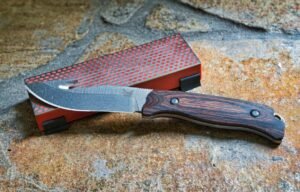
- Not every knife needs the same treatment. A kitchen knife, a craft knife and a saw blade are sharpened in different ways.
- Sharpen rather than replace. A blade that has simply lost its edge usually needs an angle restored, not a new blade.
- Sharpening changes the geometry. Repeated sharpening slowly alters a blade, so heavy use and heavy sharpening are not the same thing.
- Pros: Restoring an edge is far cheaper than replacing a good knife; a sharp blade is safer because it cuts where it is aimed.
- Stones last for years and need no power.
- A sharp knife needs less force, which reduces slips.
- Cons: Learning to sharpen properly takes practice and can go wrong early on.
- Very thin or very hard blades need specific stones and careful technique.
- A badly sharpened edge can be worse than a dull one.
Put ten minutes into the edge and the knife you own starts performing like a new one again.
4. Angle Grinders: Fast, Useful And The Most Common Cause Of Injuries
Nothing in a workshop removes and shapes material faster than an angle grinder. The image shows one in use on a clamped metal workpiece with the guard in place and sparks directed away from the operator – which is exactly how it should be used, and exactly the detail most people skip.
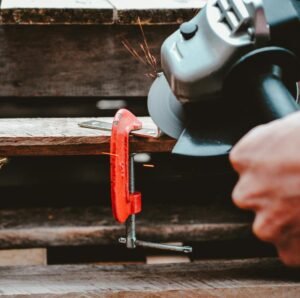
- The guard is not optional. It exists to stop a broken disc travelling towards your face.
- Disc and tool must match. A cutting disc, a grinding disc and a flap disc are different tools, and using the wrong one is dangerous.
- Hold the tool so sparks go past you. The direction of the sparks tells you the rotation and the risk.
- Pros: Removes and shapes material far faster than any hand tool; a single disc type covers cutting, grinding and finishing.
- Compact and usable in tight spaces with the right disc and a guard.
- Works across metal, masonry and wood with the appropriate disc.
- Cons: The highest injury risk in an ordinary workshop if guards are removed or discs are used wrongly.
- Noise and dust require eye, ear and respiratory protection.
- Consumables add up quickly on heavy work.
Treat it as the most dangerous tool you own, and it stays one of the most useful.
5. Machine Polishing: How Long A Correction Actually Takes
Machine polishing is the slowest of the jobs in this roundup, and the one most often cut short. The dual-action polisher on the glossy black bodywork shown here is the tool doing the work; the time is going into the passes, the changing of pads and the checking between stages.
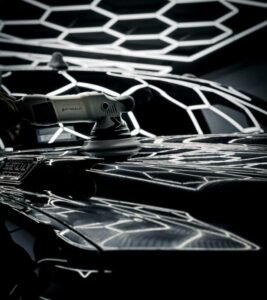
- Three stages, not one. Compounding removes defects, refining removes the compounding haze, and protection seals the result.
- Panel by panel. Working in sections and checking as you go is what stops a good result turning hazy again.
- Time is set by the paint, not the clock. A hard, neglected finish takes far longer than a well-maintained one.
- Pros: Removes swirls, haze and light oxidation that hand methods cannot reach.
- Consistent results once the pad and compound pairing is right.
- A corrected surface reflects light evenly, which is visible from any angle.
- Cons: Time-consuming, especially on a first correction.
- Heat from a stationary polisher can damage clear coat, so the pad must keep moving.
- Improper product choice can haze a finish that was previously fine.
Allow the time the paint actually needs, and the finish stays corrected long after the workshop is cleaned up.
6. CNC And NC Machines: What Programmed Control Changes
The last tool in the roundup is the one that changes how a job is set up rather than how it is done by hand. The coated cutting bit shown descending into a machined component is the visible end of a process that differs from manual machining in a very specific way: the movement is driven by a program.
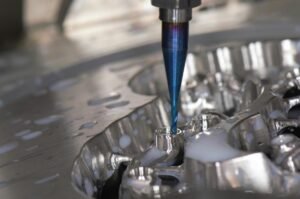
- NC is the foundation. Numeric control moves axes to programmed coordinates, with the operator setting the points and the machine repeating them.
- CNC adds the toolpath and editing. The program drives the tool through the whole sequence, so a design can be repeated and changed.
- Repeatability is the advantage. The same program produces the same part, which is what makes batches and small production runs practical.
- Pros: Repeatable accuracy across long runs; complex shapes that are impractical by hand become routine.
- Repeat jobs need only the program, not a skilled operator at every step.
- Fewer remeasurements once the program is proven.
- Cons: A higher setup cost than manual work for a one-off job.
- Programming and fixture setup take real time before any cutting starts.
- Tool wear still has to be managed, and a worn tool ruins a good program.
It is a different way of making the same part, and it pays off the moment you need the part more than once.
Buying Checklist: What To Confirm Before You Buy
- Serviceability first. Check that consumables, belts and seals are available for the exact model.
- Check the guard and safety features. They should be present, adjustable and easy to use one-handed.
- Match the power to the work. Undersized tools stall, overheat and wear out faster.
- Ask what comes in the box. Blades, discs, bits and oil are often the difference between usable and unusable on day one.
- Confirm the warranty covers parts. A long warranty that excludes wear parts is worth less than it sounds.
- Plan for the consumables. Budget for a year of discs, blades and pads before you buy the tool.
- Read the maintenance schedule. If it is a machine, the service intervals are part of the purchase decision.
Conclusion: Which Workshop Tools And Equipment Care To Prioritise
The tools in this roundup are not close in a ranking, because they do completely different jobs. If you buy one thing, the compressor and its oil schedule will do more for the workshop than any other purchase, because everything else runs off it or alongside it.
The wider point is that maintenance is cheaper than replacement, and that the tools people complain about are rarely bad tools. They are usually tools that were never sharpened, never drained and never checked, which is why a short list of specific, repeated care tasks beats a long list of new equipment every time.
Frequently Asked Questions
How often should I change the oil in an air compressor?
Follow the manufacturer’s schedule, which is commonly a few hundred hours of running time or roughly annually, and shorten it if the tool is used heavily or in a dusty environment. Check the level before each session as well, because a low level causes damage far faster than a missed service interval.
Do all knives need sharpening?
Not all at the same time, and not in the same way. A chef’s knife that still cuts cleanly only needs a light touch-up, while a blade that has started to tear or slide needs a full sharpening. Very thin or specialist blades are better left to someone experienced.
Is it safe to use an angle grinder without a guard?
No. The guard is there to stop a disc that breaks, and a fragment spinning off at speed is one of the most dangerous things in a workshop. If the guard will not stay in position for the work you are doing, use a different tool for that job.
How long does machine polishing a car actually take?
It depends on the condition of the paint rather than the size of the car. A neglected finish with swirl marks and oxidation takes many hours across compounding, refining and protecting, while a well-maintained car needs far less. Attempting a single-pass correction on a neglected finish produces haze that has to be corrected again.