




Glowing floral decor sits in an odd corner of home lighting: too dim to work by, too deliberate to be background. That is exactly why it works. These four shapes of light up flowers and LED branch trees differ in the surface they suit and how they read once the room goes dark.
At A Glance: The Four Picks In One List
At A Glance
- Light Up Lily Blooms – a colour-changing centrepiece that carries a whole dark corner.
- LED Branch Tree In A Vase – the smallest option, best as a detail on a side table.
- LED Tree Light With A Square Base – freestanding, so it suits a floor or a wide shelf.
- Rose-Shaped Decorative Lamp – one soft accent for a bedside table or windowsill.
How We Chose These Decorative Lights
These four are separated less by quality than by job. Two exist to be looked at from across a room; two work best within arm’s reach.
- Glow type. Steady warm white reads as calm; a colour cycle becomes the focal point and can dominate a small room.
- Scale and footprint. A base that overhangs an edge is a fall waiting to happen.
- Power source. A battery pack frees a piece to sit anywhere, then needs hiding; a plug gives steady output but ties it to a socket.
- Switched-off look. These sit dark most of the day, so stems and petals must still be worth looking at unlit.
1. Light Up Lily Blooms: The Colour-Changing Centrepiece
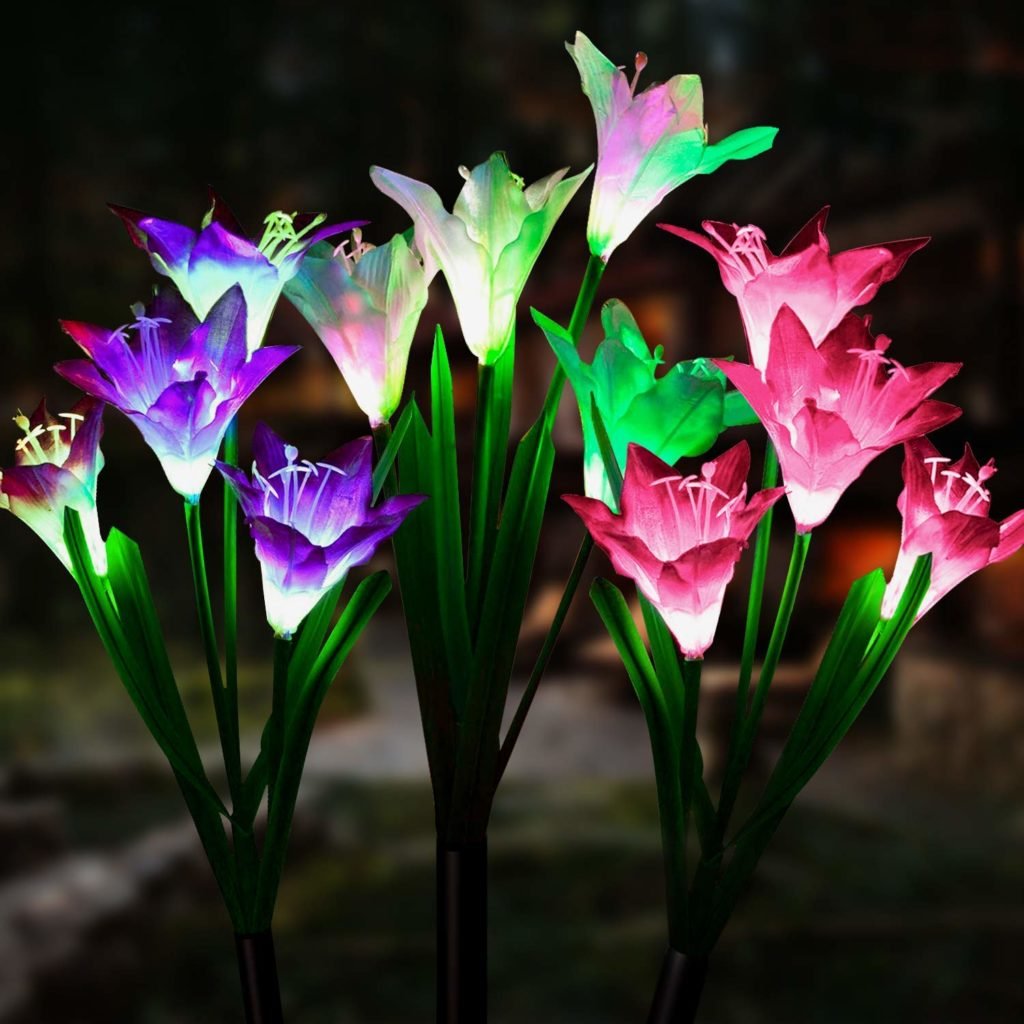
This is the shape most people picture when they think of light up flowers: lily stems in a container, each bloom lit from inside, the colour drifting from one tint to the next. Wire stems bend outward, so they fill an empty surface instead of standing in a stiff bundle.
On a dark console against a plain wall it is striking, because the petals take the current tint and throw a soft wash behind them. Beside a lit lamp the illusion collapses, and unlit the blooms read as moulded plastic.
Judge this one only in a dark room, because that is the only condition it was built for.
Pros:
- Turns an empty console into a focal point without a lamp and shade.
- Bendable stems spread to suit the surface width.
- Most versions hold a single tint instead of cycling.
Cons:
- Petals look manufactured in daylight.
- Strong colour cycling can feel busy in a small room.
- The battery pack needs concealing and fresh cells.
2. An LED Branch Tree In A Vase: Small Scale, Big Effect
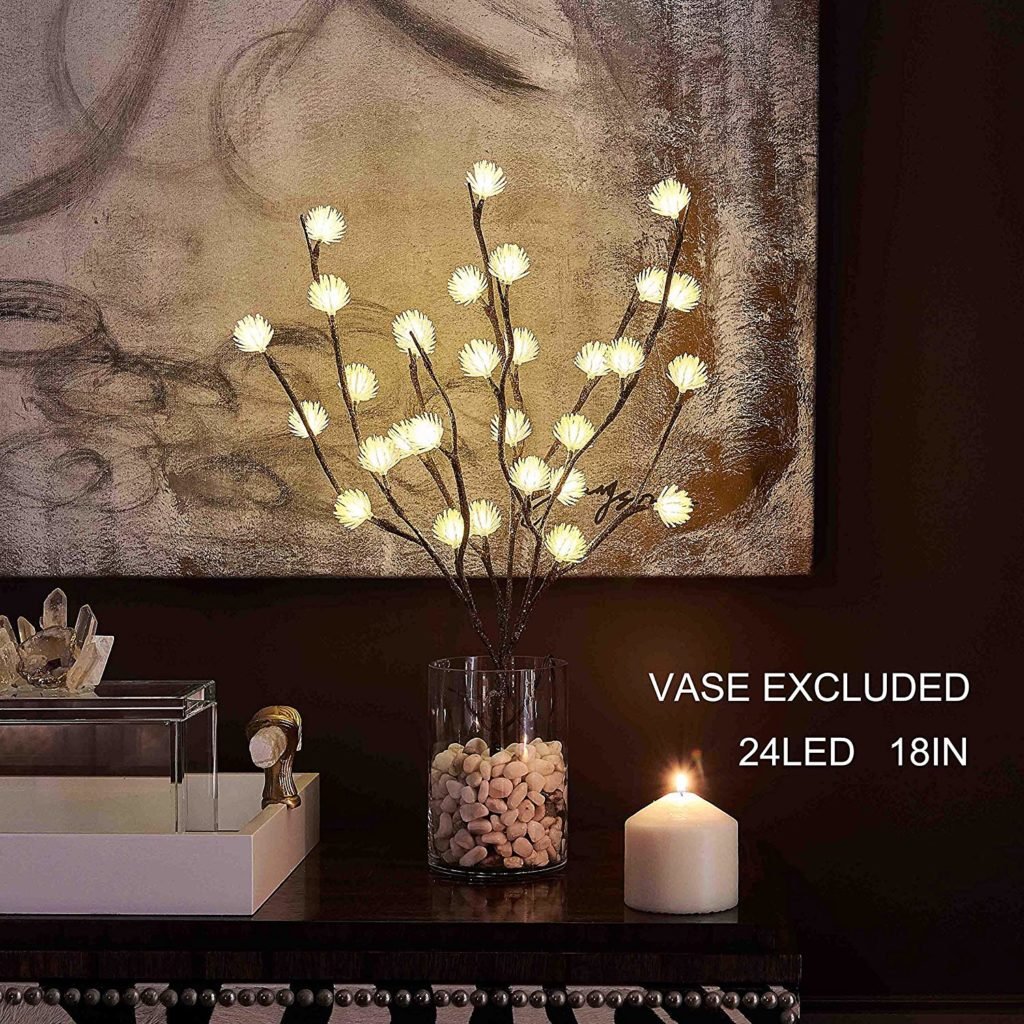
The branch tree is the quiet member of this group. A handful of thin bare branches, each wound with tiny warm-white LEDs, stands in a vase and sparkles at a low, even level. No colour change and no attempt at drama, which makes it the easiest of the four to live with.
Its advantage is footprint: the piece is only as wide as its container, so it fits a narrow shelf or the gap beside a bookcase. Be clear about output, though, because this is sparkle rather than illumination. Check whether a vase is included.
As a light source it fails and as atmosphere it succeeds, so buy it knowing which of the two you want.
Pros:
- Small footprint that suits shelves too narrow for a lamp.
- Warm sparkle adds depth without glare.
- Branches can be set into any vase you own.
Cons:
- Low output; no substitute for a lamp.
- Wires along the branches show up close.
- A short branch count limits fullness.
3. An LED Tree Light With A Square Base: The Freestanding Option
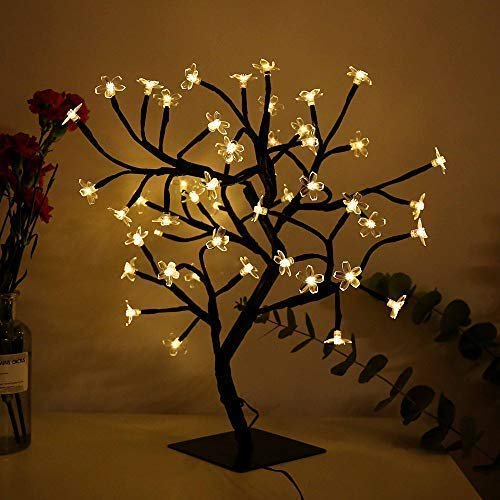
This version solves the support problem outright. Branches rise from a weighted square plinth, so the piece stands by itself on a shelf or the floor, and the upward spread gives a corner the height a table lamp would overcrowd.
It is also the option most likely to run from a plug, so output stays steady without hunting for cells. The trade-off is placement: the cable must reach a socket without crossing a walkway. Measure the plinth first, since it is wider than the branch spread suggests.
Pros:
- Stands unaided on floors, sideboards and open shelves.
- Weighted base survives pets and vacuuming.
- Plug power means consistent brightness.
Cons:
- The square base needs flat ground and takes space.
- A visible cable limits placement.
- Steady warm white only, with no colour.
4. A Rose-Shaped Decorative Lamp: A Single Soft Accent
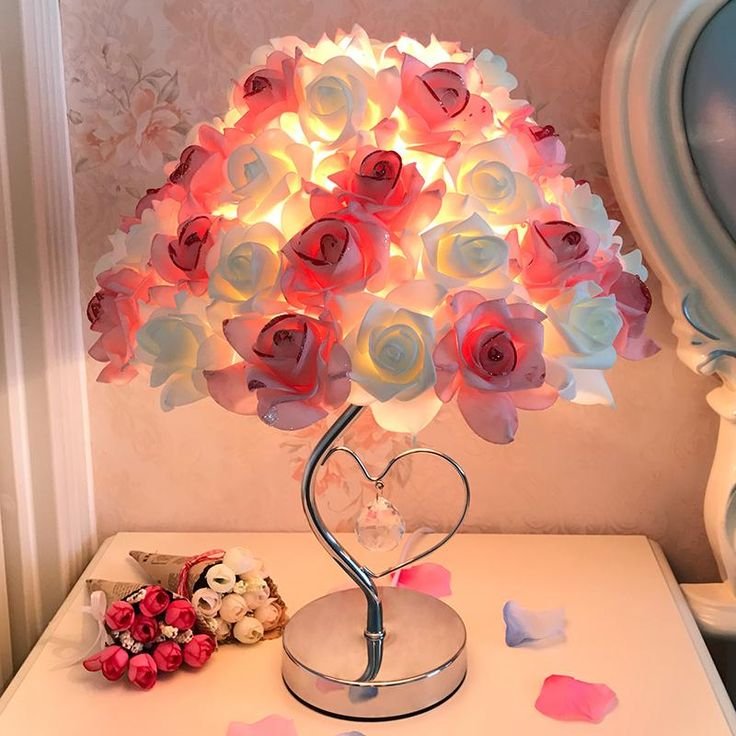
The rose lamp is a different idea altogether. Instead of many small points of light, one sculpted flower hides a single source under layered petals, so the glow spreads through the material rather than escaping as a beam.
That makes it the best of the four for a bedside table or windowsill, where one deliberate object beats an arrangement. Expect it to light itself rather than the room, and note that dust dulls the petals.
Pros:
- Diffused glow through petals, softer than a bare bulb.
- Compact enough for a narrow sill.
- Looks sculptural rather than decorative when unlit.
Cons:
- One small accent only; it will not light a room.
- Plug and cable restrict placement.
- Dust dulls the petals over time.
How They Compare Side By Side
| Decorative Light | Glow Behaviour | Best Placement | Power | Main Limitation |
|---|---|---|---|---|
| Light Up Lily Blooms | Colour-changing | Centre of a console or table | Battery pack | Blooms look flat in daylight |
| LED Branch Tree | Steady warm white | In a narrow vase or jar | Battery or plug | Small footprint limits branches |
| LED Tree Light | Steady warm white | Freestanding on a shelf or floor | Plug | Square base needs a flat surface |
| Rose-Shaped Lamp | Soft single glow | A shelf, sill or bedside table | Plug | One accent, not general lighting |
The four shapes matched to the surface each one handles best.
Buying Checklist: What To Confirm Before You Buy
Most disappointment with glowing decor comes from one detail missed in the listing. Run through these six points before ordering.
- Power source. Confirm cells, rechargeable pack or plug, and where the pack will hide; a compartment too big for the container spoils the look.
- Glow colour behaviour. Warm white and colour-changing feel completely different on a wall, so check whether a cycle stops on one tint.
- Footprint and base stability. Measure the surface, then the base; a wide plinth on a narrow ledge is how these break.
- LED longevity and replacement. Many blooms and branches use sealed LEDs, so check the quoted working life and whether spares exist.
- Whether the vase is included. Branch trees are sometimes stems only, so compare container height with stem length.
- How it looks switched off. Look for an unlit photo; daylight is when decorative pieces earn their place.
Conclusion: Which Glowing Decor Fits Your Space
For one piece that changes a room after dark, take the lily blooms and give them a dark wall. For a subtle detail that never competes, the branch tree in a vase fits almost anywhere.
Where a corner needs height or nothing can lean, the tree light with the square base solves it; the rose lamp suits one soft object beside a bed. Pick by surface first, then by how dark the room gets.
Frequently Asked Questions
Do light up flowers need to be plugged in?
Not always. Bloom clusters and small branch trees usually run from a battery pack tucked into the container, while taller tree lights and rose lamps tend to come with a plug and cable. Check first, because a plug decides where the piece can stand.
How bright are light up flowers compared to a table lamp?
Far dimmer. The light filters through petals or comes from tiny points, giving a soft glow rather than useful illumination. Treat them as mood lighting, not task lighting.
Can LED branch trees be used outdoors?
Most are indoor pieces, and battery compartments plus low-voltage wiring are rarely sealed against rain. A covered porch may be fine if the product is listed for outdoor use, so check rather than assume.
How do I clean artificial light up flowers?
Switch off or remove the cells, then dust petals and branches with a soft brush or dry cloth. A barely damp cloth handles marks on fabric petals, but dry them fully before switching on.
Choose glowing decor by the surface it will sit on and how dark the room gets, and it will look intentional instead of improvised. For more ways to finish a room, browse our home decor ideas and these practical lighting guides.