


A bag is one of the few things you touch every single day, and the wrong one turns into a problem faster than almost any other purchase. A backpack that feels fine on a Sunday walk can be uncomfortable by Friday, and a lunch bag that suits a picnic is not much help during a twelve-hour hospital shift.
That is why a single “best bag” answer does not work. The bag worth buying depends entirely on the job it has to do: getting a laptop through a station, carrying a baby and their bottles across a park, or keeping food cold through a long commute.
Below are six everyday carry bags, each chosen for a specific part of daily life, with what it does well, what it does not, and how it stacks up against the others.
At A Glance: The Six Picks In One List
- Daypacks for everyday carrying – soft-sided packs in a wide range of colours, comfortable on both shoulders and easy to load.
- Rolling laptop bags – wheeled briefcases that keep a laptop and paperwork off the ground and off your back.
- Crossbody purses – small hands-free bags for errands, school runs and anything that needs a phone and a wallet only.
- Cooler and lunch bags – insulated carriers for baby bottles, family meals and meals that need to survive a long shift.
- Breast pump backpacks – dedicated carrying for pumping equipment, bottles and a changing layer, all with hands free.
How We Chose These Bags
- Comfort over long periods. A bag that gets uncomfortable after an hour fails at the one thing it was bought for.
- Organisation. Pockets, dividers and dedicated compartments decide how fast you can find a thing in a hurry.
- Capacity for the actual job. The right size is set by what you carry, not by how big the bag looks on the shelf.
- Build and cleanability. Fabrics that wipe clean and zips that survive a season of daily use matter more than a detail nobody notices.
1. Daypacks: The Colour Line That Fits Almost Every Day
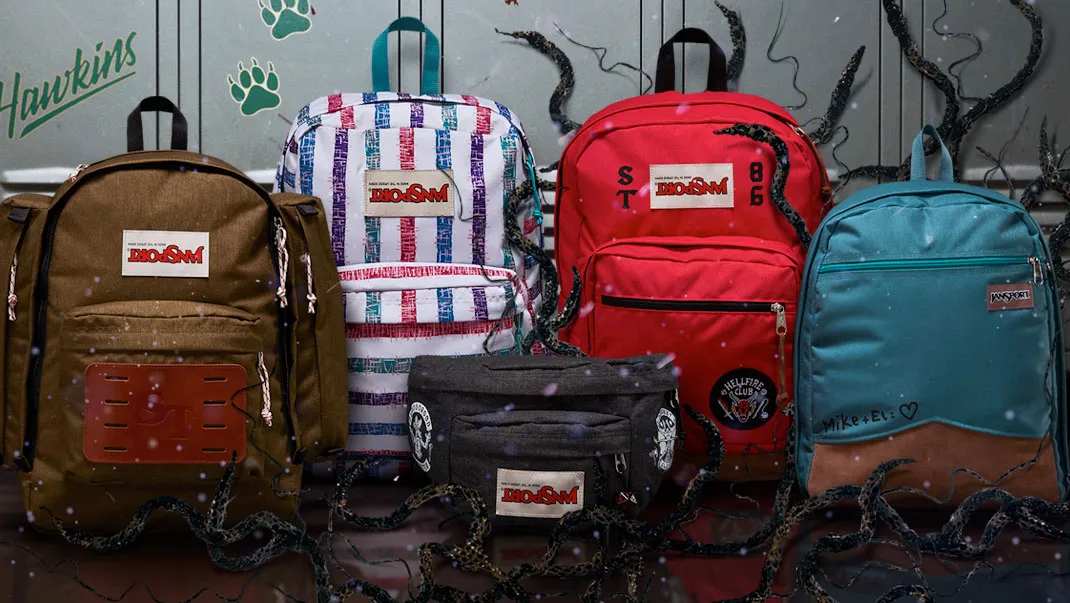
The classic daypack is the hardest-working bag in this roundup. This line-up shows the same silhouette across several colours – an olive bag with tan straps, a plain black one, a striped version, a red one, a teal one and a darker grey – which makes it easy to see that the design does not change much underneath.
- Two shoulder straps, one compartment. The traditional school-bag shape, with the main cavity taking books, a folder and a lunch box.
- Colour choice matters more than features. With the shape held constant, the difference between a bag that gets used and one that gets left in a cupboard is often down to whether you like the colour.
- Front pocket for the small things. Keys, a phone and a transit card are the items that need to be reachable without unpacking the whole bag.
- Pros: Wide range of colours from one design; simple, familiar shape that suits school, work and short trips.
- Even weight distribution across both shoulders.
- Easy to clean and no complicated closures to learn.
- Cons: No dedicated laptop compartment in this style.
- Open top offers no rain protection.
- A single large cavity means small items sink to the bottom.
For everyday carrying where the load stays light, this is the simplest pick that works.
2. Rolling Laptop Bags: For Commutes With A Computer In Them
Once a bag has to hold a laptop, a charger and paperwork, a shoulder bag starts to feel like the wrong shape. A rolling bag puts that weight on wheels and on a handle, which is why this black briefcase style works so well for station platforms and airport terminals.
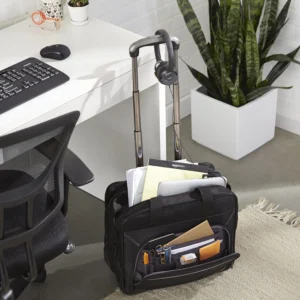
- Telescoping handle and wheels. The bag rolls beside you rather than hanging from your shoulder, which takes the load off your back entirely.
- Compartments that open flat. Folders and a laptop sit in separate sections so they slide in without fighting the rest of the contents.
- Works as a handbag too. Carry the handle down and it becomes a conventional case for short distances and lifts.
- Pros: Takes the weight off your shoulders on long walks; protects a laptop from being dropped or sat on.
- Expands into a flat, organised case at a desk.
- Doubles as a briefcase for meetings.
- Cons: Bulky when the handle is extended, and awkward on stairs.
- Wheels and handle add weight to an empty bag.
- Overfilling it makes it noticeably harder to steer.
If your commute involves a computer and a crowd, this solves a problem no shoulder bag does.
3. Crossbody Purses: Small, Hands-Free And Quick To Reach
Not every day needs a large bag. This crossbody style is carried the way the photo shows it – over the shoulder and across the body, with the strap taking the weight and the bag sitting close to the body. That makes it the right choice for short trips where carrying more would only get in the way.

- Worn across the body. The strap takes the load off one shoulder and keeps both hands free.
- Close to the body. Sits at hip height, so it stays secure in a crowd and does not swing when you walk.
- Soft leather that settles. The kind of material that shapes to the body and stays comfortable rather than digging in.
- Pros: Hands free for doors, children and shopping; the smallest and lightest option here.
- Stays close to the body, so it is less of a target in a busy place.
- Enough room for a phone, a wallet and a small set of keys.
- Cons: Not enough space for a tablet, a book or a work laptop.
- Can swing awkwardly when running for a train.
- The crossbody strap is not adjustable for very long or very short wearers.
For a phone, a wallet and a short walk, this is the bag that disappears into the day.
4. Baby Cooler Bags: For Days Out With Bottles And Formula
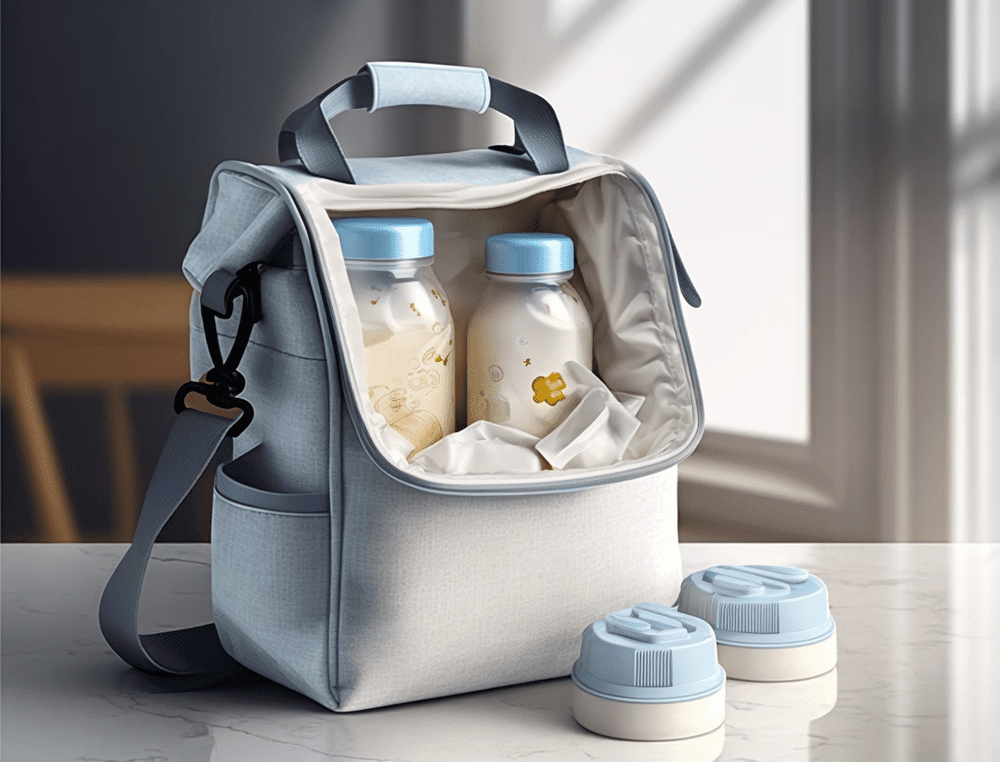
Getting out of the house with a newborn means carrying more than you planned for, and some of it has to stay cold. This soft-sided cooler bag is built for exactly that: a padded body, a top handle, a shoulder strap, and an interior wide enough to hold bottles standing up.
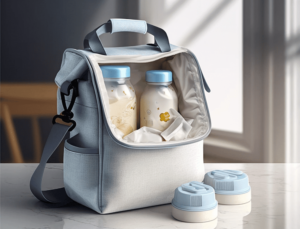
- Bottles stand upright inside. The interior is deep enough for bottles and formula containers to be packed without tipping.
- Two ways to carry it. A top handle for short distances and a shoulder strap for longer walks or a pram.
- Soft, wipeable shell. The outer material folds down when empty and wipes clean when a bottle does not make it in.
- Pros: Keeps bottles and formula organised and upright; packs flat when not in use.
- Light enough to carry alongside everything else a day out requires.
- The shoulder strap leaves a hand free for a pram or a bag.
- Cons: Soft walls mean less protection for fragile items than a hard cooler.
- No separate pocket for nappies or a changing mat.
- It is a cooler, not a fridge – long days out still need ice packs refreshed.
When bottles are part of the day, a purpose-built cooler bag is easier to live with than a general handbag.
5. Lunch Bags: For Long Shifts And Long Journeys
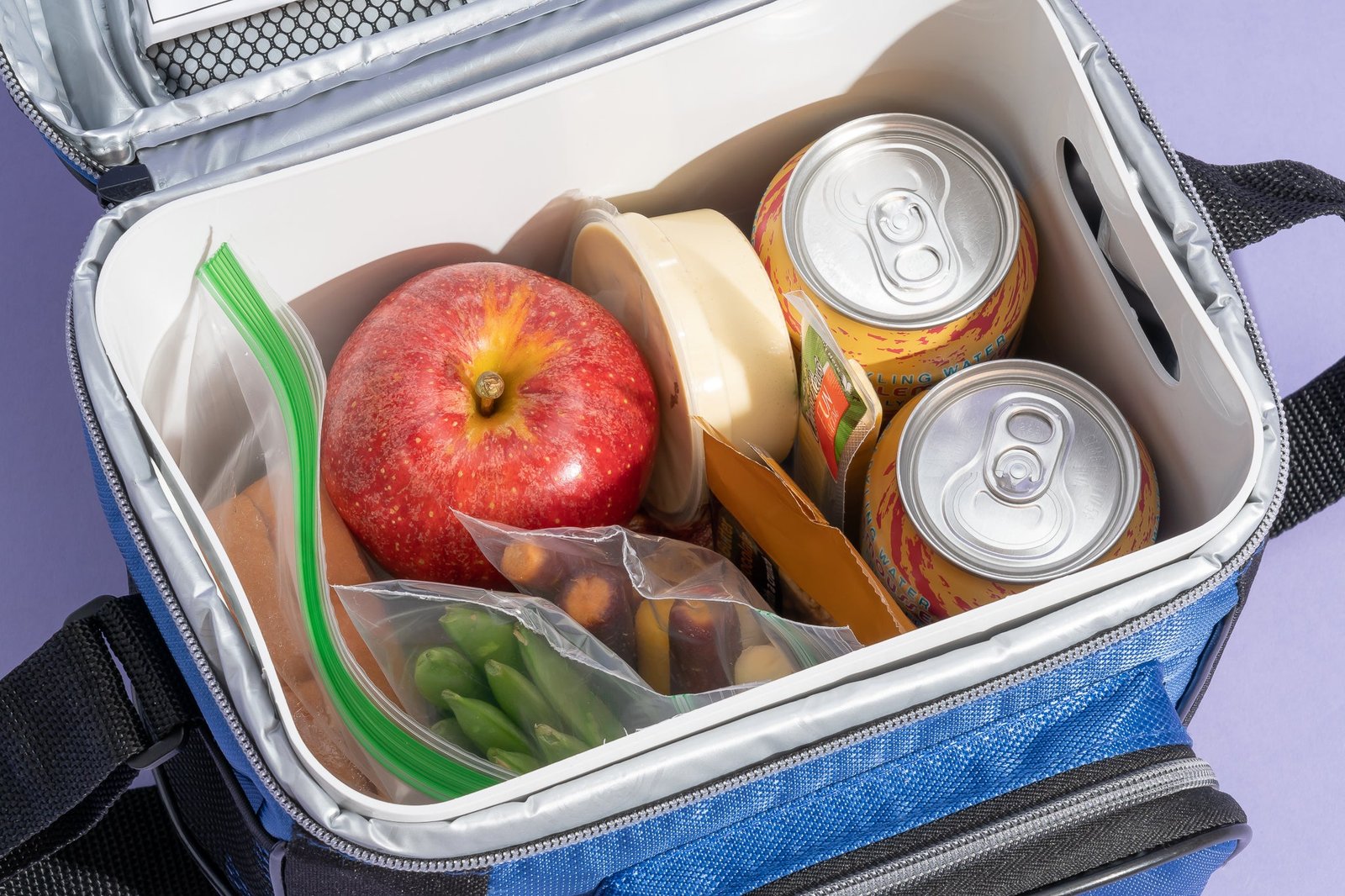
Food that has to stay edible for hours needs more than a tote. This hard-sided cooler is the opposite approach to the soft baby cooler: a rigid body, a tight lid and an interior that holds a full meal – a red apple, bananas, canned drinks, a green bottle – plus an ice pack laid flat against the contents.

- Rigid insulated body. The hard shell and tight lid keep cold in far longer than a soft bag allows.
- Fits a real meal. Enough interior space for a full portion and a drink, not just a sandwich.
- Ice pack friendly. The flat base is made for a reusable ice pack to sit against the food.
- Pros: Keeps food cold for a full shift or a long journey; the rigid body protects the contents from being crushed.
- Easy to wipe clean inside and out.
- Works for a commute, a day trip or a working shift.
- Cons: Bulkier and heavier than a soft lunch bag when empty.
- Not a lunch box for a child – no easy lunchbox compartments inside.
- Still needs ice packs; it delays warming rather than preventing it.
For food that has to survive a long day, the hard cooler is the pick that keeps working.
6. Breast Pump Backpacks: For Carrying Everything Hands Free
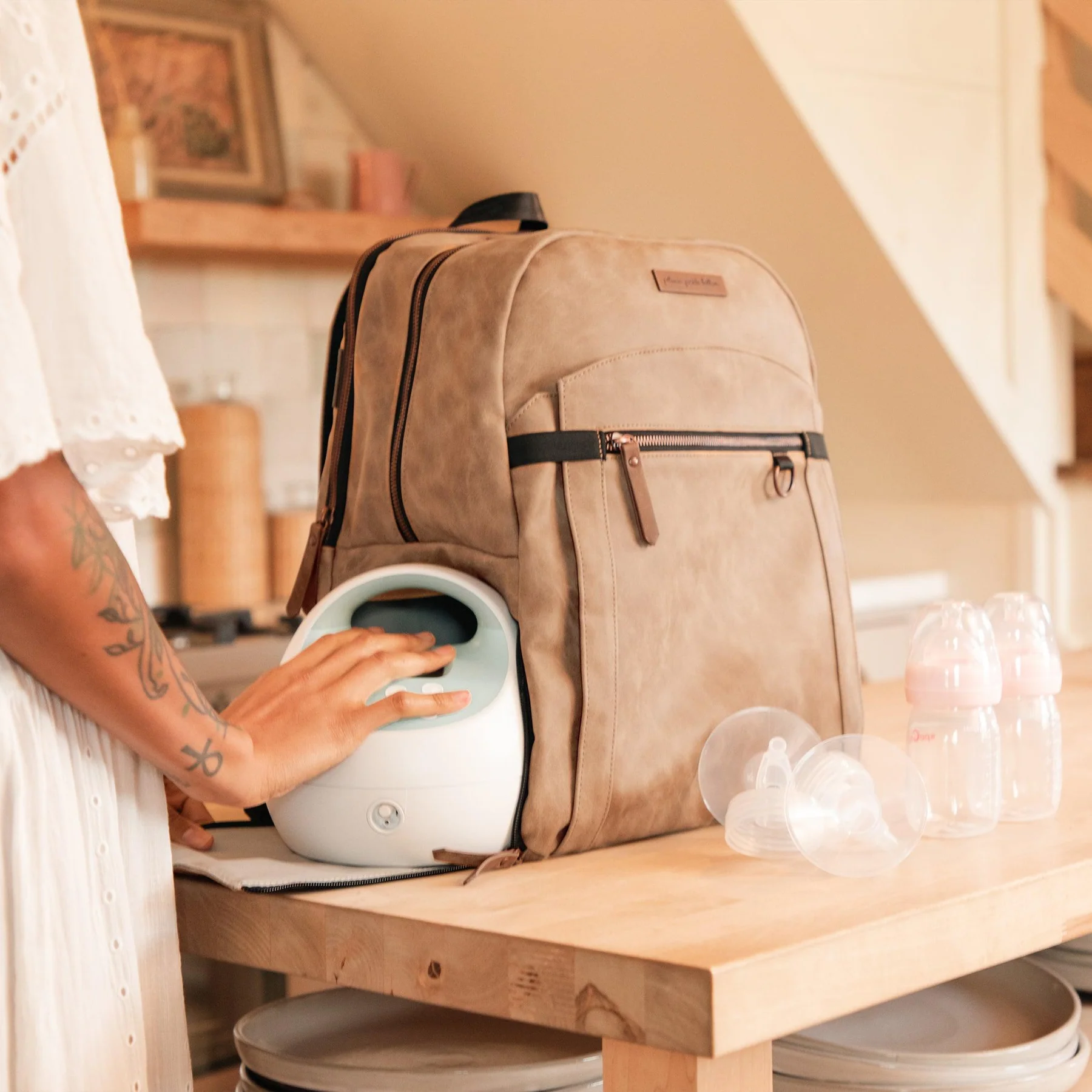
Pumping equipment adds up quickly: a bag, a bottle, a changing layer, a spare part for a part that stops working at the wrong moment. This canvas backpack is built to carry that kit and keep both hands free, which is the part that actually changes how a day goes.
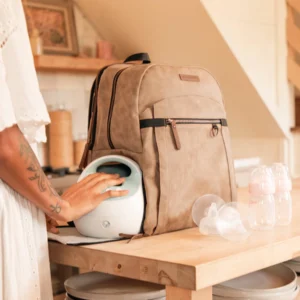
- Wide, padded straps. The load sits close to the back instead of pulling on one shoulder, which matters over several hours.
- Front zip pocket. A quick-access pocket for the things you reach for mid-session rather than at the start.
- Canvas with leather trim. A material that takes a knock, wipes reasonably well and looks less clinical than a plastic shell.
- Pros: Both hands free, which makes carrying and caring for a baby far more manageable.
- Compartments keep pump parts together instead of loose in a bag.
- Looks like an ordinary bag, so it works in more places than a dedicated medical case.
- Cons: Canvas is heavier than a nylon equivalent and can feel warm.
- Needs a separate insulated section if milk has to stay cold for long.
- Compartments are arranged for pumping kit, so other kit has to fit around them.
For kit that has to travel with you all day, hands-free capacity is the feature that matters most.
Buying Checklist: What To Confirm Before You Buy
- Match the bag to the job. A laptop commute, a long shift and a day out with a baby are three different problems.
- Check the weight empty. Carry it around the shop with something inside before you commit.
- Test the access points. Open the main compartment and the front pocket one-handed while wearing it.
- Look at the strap, not the bag. Strap width, padding and adjustability decide whether you will still like it in month three.
- Confirm the internal size. Measure what you carry now, then check it fits rather than assuming.
- Check cleanability. Removable liners and wipe-clean linings are worth more than extra pockets in the long run.
- Try the closure. Zips that work with cold or gloved hands matter more than the pull on a showroom sample.
Conclusion: Which Everyday Carry Bag Fits Your Day
There is no single best everyday carry bag, because the honest answer depends on what a normal day contains. If your day is a laptop and a station platform, the rolling bag solves a problem a shoulder bag cannot. If it is a baby, bottles and a long walk, the purpose-built cooler bag beats anything improvised.
What the six have in common is narrower than it looks: the daypack wins on simplicity and colour, the crossbody purse wins on being small and hands-free, and the three specialised bags win because each one is shaped around one specific job. Pick the job first, then the bag, and the choice becomes straightforward.
Frequently Asked Questions
How do I choose a backpack that will not hurt my shoulders?
Look for wide, padded straps and a padded back panel, then try it on loaded rather than empty. If the weight you plan to carry is heavy, add a sternum strap and a hip belt, because those transfer load off the shoulders and onto the frame.
Is a rolling laptop bag better than a backpack for a commute?
On flat ground with a station at the end, a rolling bag usually wins because the weight leaves your shoulders. On stairs or long walks without smooth surfaces, a good backpack is often easier to manage. Test the route before you commit to wheels.
Do I need a cooler bag for a normal day out with a baby?
If bottles or formula are involved, yes. A cooler bag keeps them at a safe temperature for the length of the trip and stops them rolling around the bag. Add an ice pack for anything longer than a couple of hours.
How do I stop a lunch bag from leaking?
Keep it upright, keep it closed, and put the ice pack flat against the food rather than under it. A rigid insulated body helps a lot here, because soft bags can be squeezed and that is when leaks usually start.