




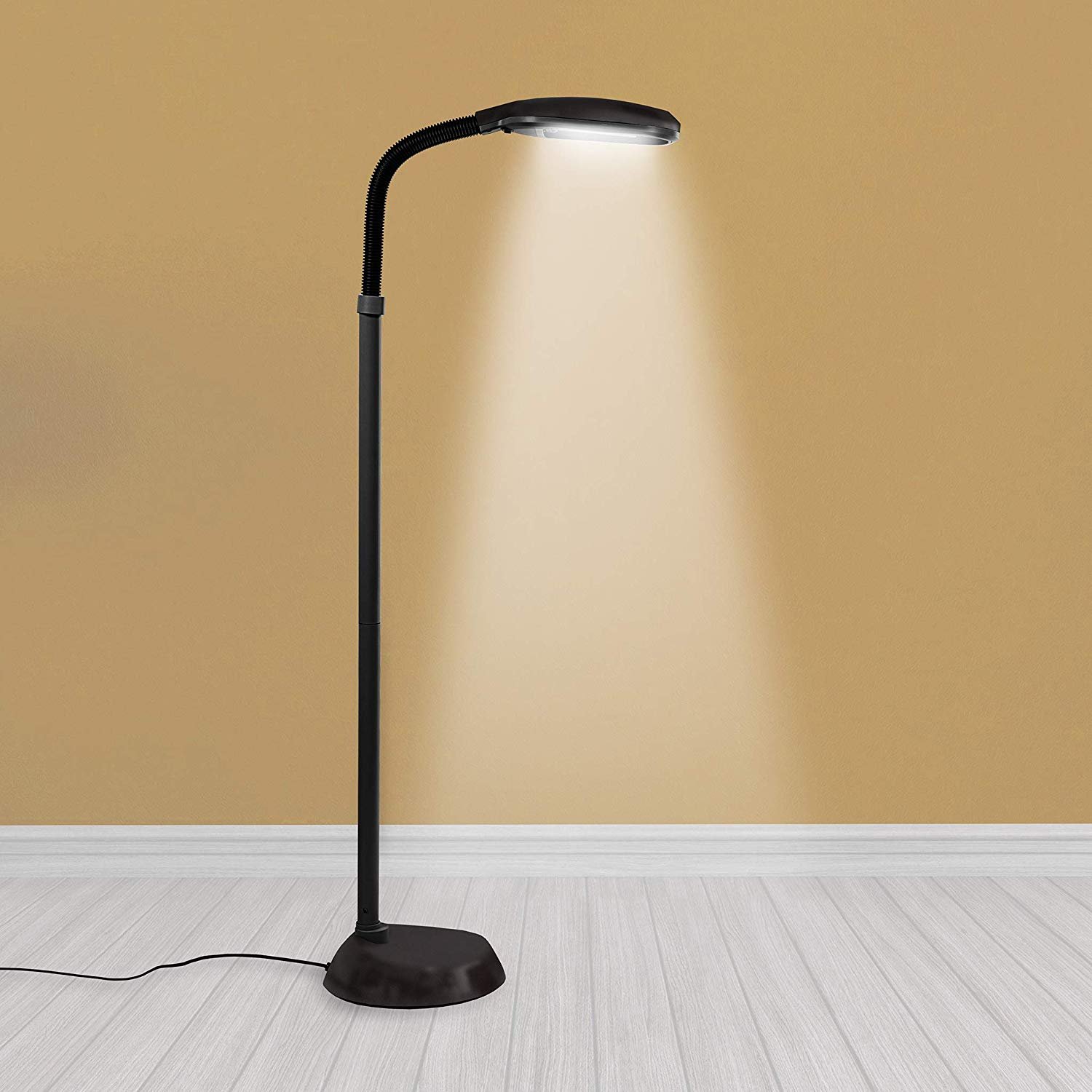
A floor task lamp does two jobs at once: it throws usable light onto the surface in front of you, and it stands in a room without becoming an obstacle. Most disappointing lamps fail one of those.
The same lamp behaves differently in every room, so the parts that decide a purchase are where the head hangs, how far it reaches and how much floor it claims. These four placements cover the positions where a floor lamp actually gets used, and what to check before you buy one.
At A Glance: The Four Picks In One List
At A Glance
- Curved neck reach – light lands on the work surface instead of on your lap.
- Lamp head shape – the part that decides whether the light is even or harsh.
- Armchair placement – a corner that works for reading, not just for looking.
- Living room use – a work light that does not make the room feel like a workshop.
How We Chose These Floor Task Lamps
We judged them as furniture that happens to make light. Reach, aim, base stability and shade shape came first, because none of those can be fixed once the lamp is in your room.
- Reach over the seat. Horizontal offset, not just height, or the light stays above the base.
- Aim that holds. Joints must stay put after a hundred small adjustments.
- Base versus footprint. Narrow enough to tuck, heavy enough to survive a shoulder.
- Shade and glare. The opening decides between an even pool and a hard edge.
1. Curved Neck Floor Lamps: Reach Over A Chair Or A Bed
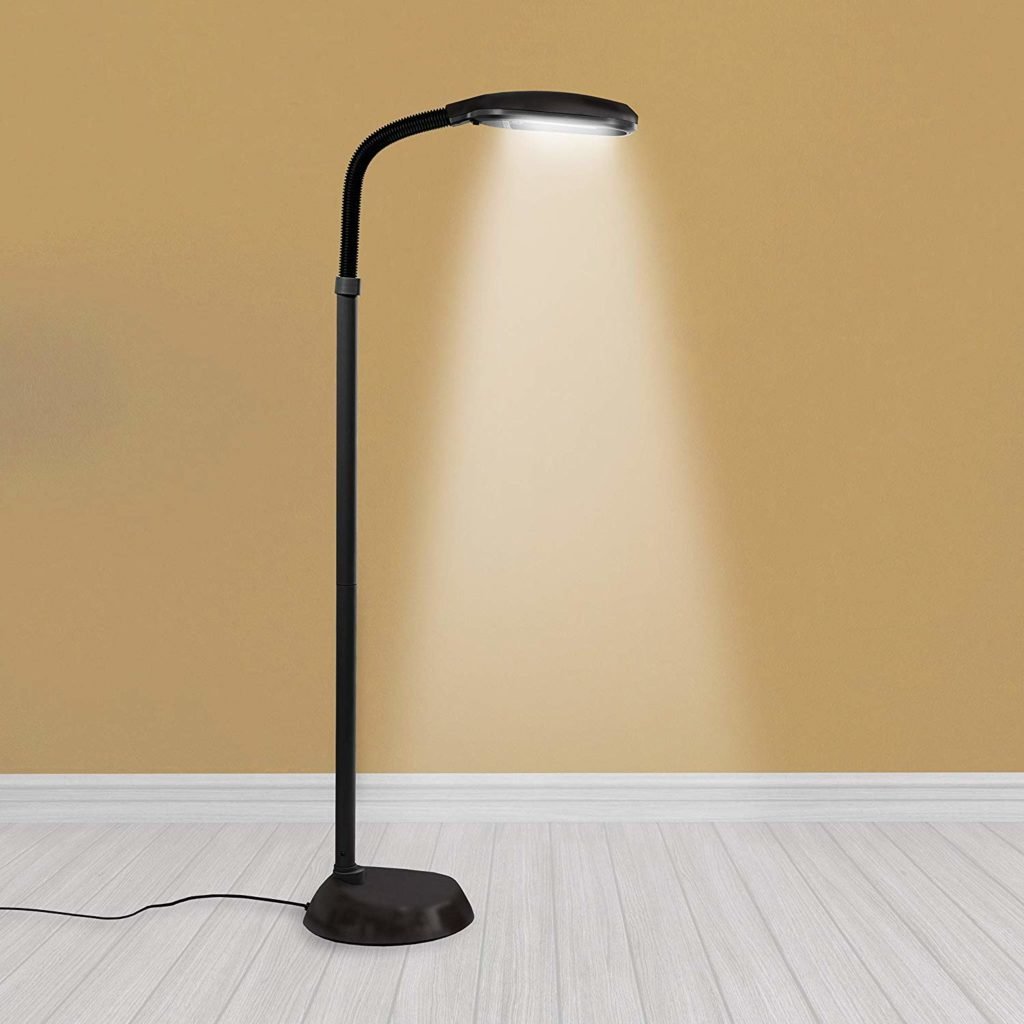
A curved neck gets overhead light into a room without fixing anything to the ceiling. The arm sweeps out and down, so the head hangs in front of you rather than above its own base.
Horizontal offset matters more than total height. A tall straight stand still puts its head over its base, while a curved one reaches into the room, so check where the head lands from your chair before committing.
The trade-off is leverage, because a long arm multiplies every nudge.
Pros:
- Light over the work with no clamps.
- Knees and feet stay clear.
- Fits beside a chair or a bed.
Cons:
- The long arm amplifies knocks.
- The base needs floor space behind the seat.
- Awkward to adjust from a low chair.
2. The Lamp Head: Where The Light Actually Comes From
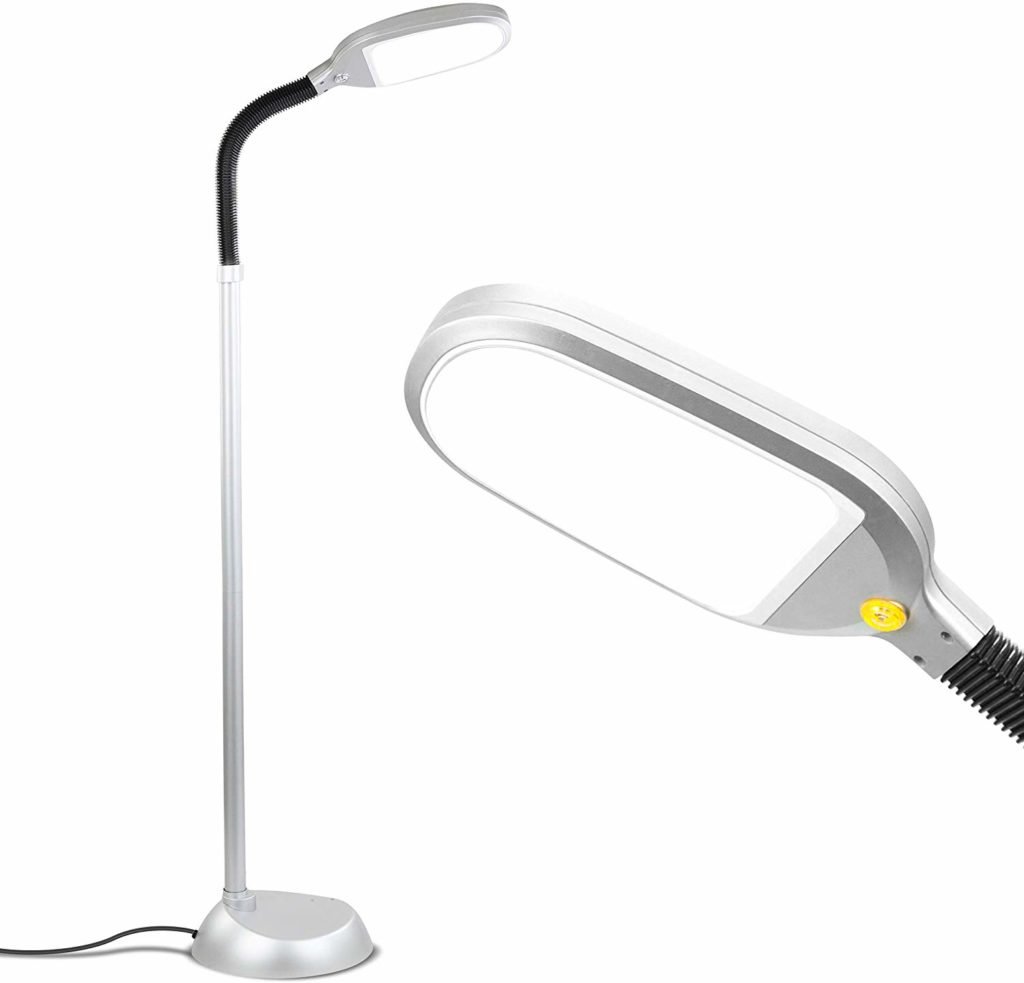
Shopping pages describe the stand and skip the head, which is backwards. The head alone decides whether a page looks flat and readable or harsh and striped.
A deep drum shade narrows the pool and drives light downward, while a shallow wide one spreads it. Angle the rim near-parallel to the surface so the bright opening stays out of your sight line.
Check the tilt joint first. A head that flops forward under its own weight drifts down all evening and has to be pushed back up.
Pros:
- Concentrates light where your hands work.
- Tilts the pool without moving the base.
- Correct rim angle keeps glare away.
Cons:
- Deep shades cast a hard edge on a book.
- Weak joints sag over a long session.
- A narrow pool leaves the desk dark.
3. Beside An Armchair: The Reading Corner Setup
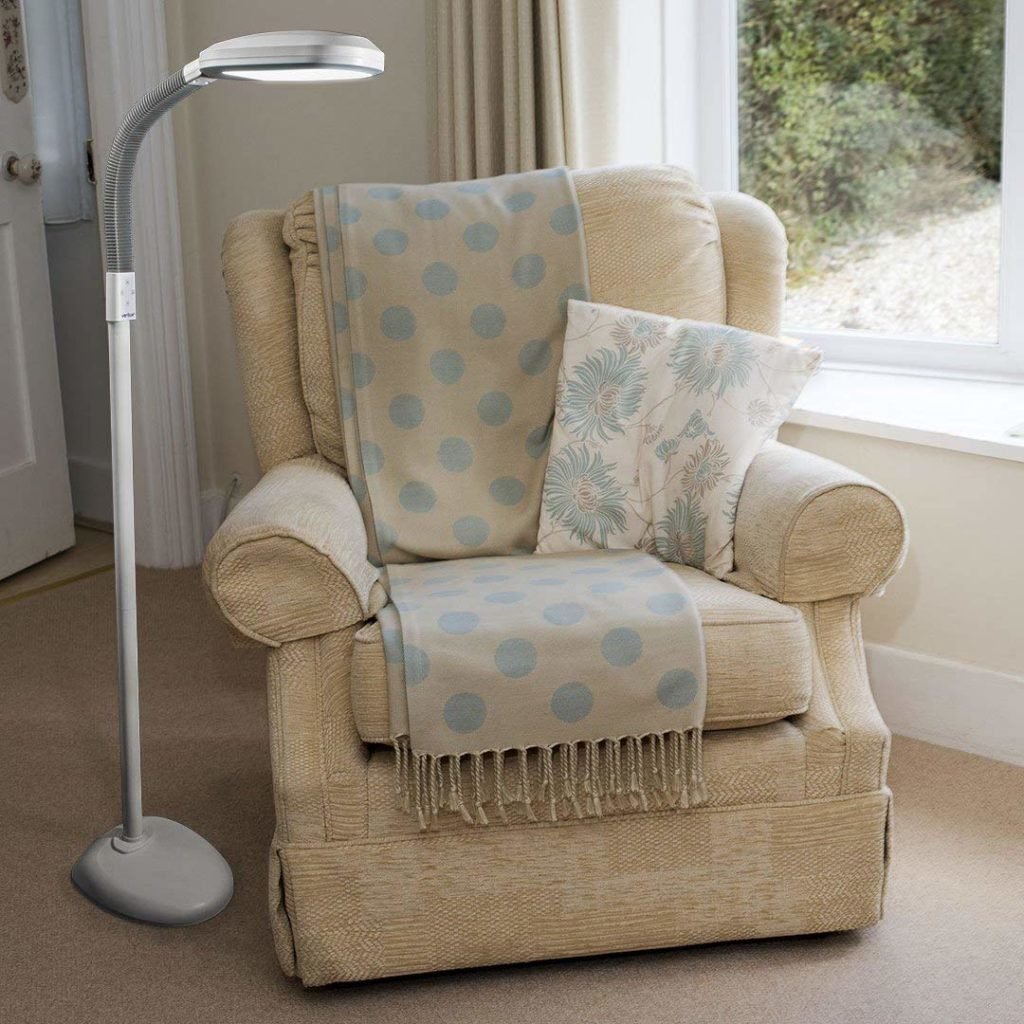
The armchair corner is where a floor lamp earns its place, and where placement is most often wrong. Put it slightly behind and to one side of the chair, away from the hand that turns pages, so light crosses your shoulder instead of being shaded by it.
An arm’s length from the chair arm is a good starting distance. Closer and the shade top glares into your eye line; further and the light spreads too wide to help.
A floor lamp is the wrong tool in a tight corner with no floor to spare, or where the only reachable spot puts the head behind your ear. A small clip-on or wall light does more there with less furniture.
Switch position matters here, because you will use it seated.
Pros:
- Reads as part of the room.
- Bright page, soft surroundings.
- Angles away for conversation.
Cons:
- The base can keep the chair off the wall.
- Over-the-arm reach is easy to misjudge.
- Switches often end up on the far side.
4. In A Living Room: Working Light Without Ruining The Room
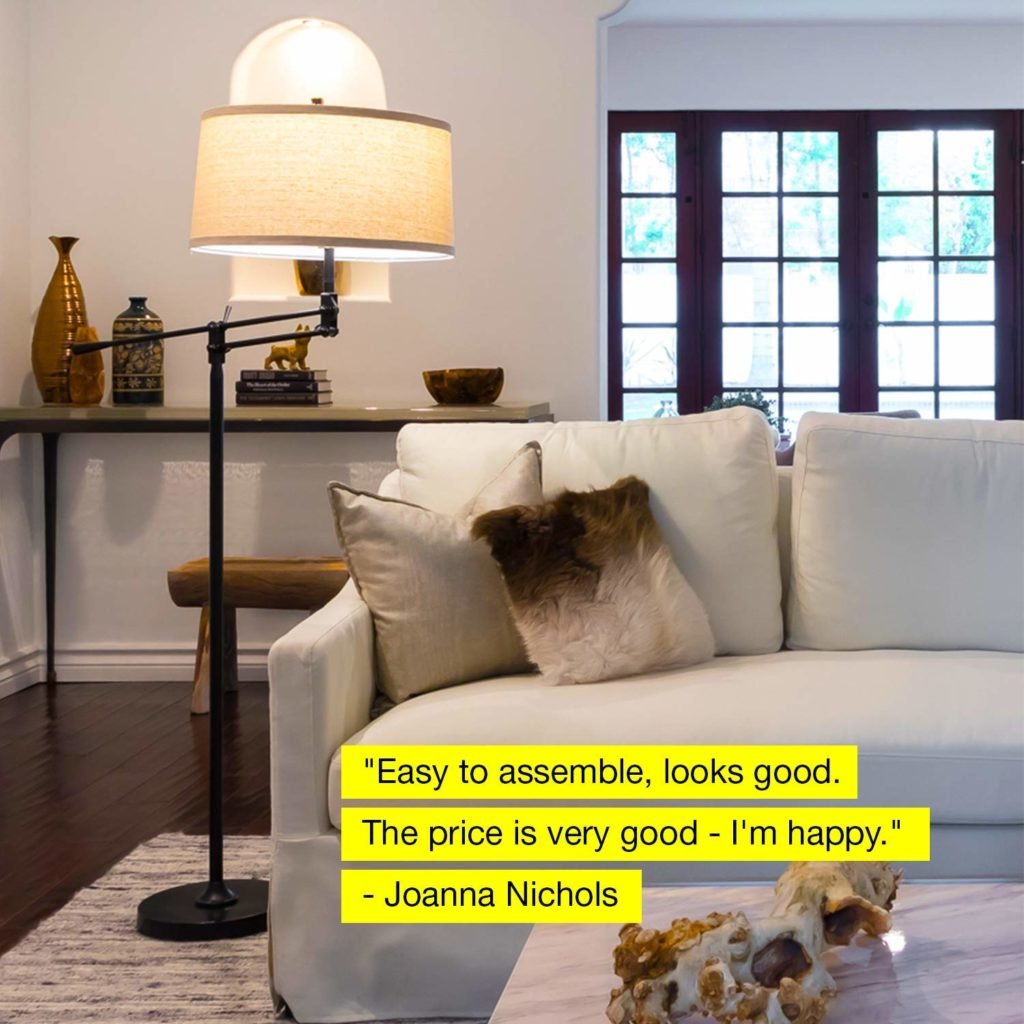
Living rooms are usually lit from above, the wrong direction for close work. Ceiling light lands on your head, so your own shoulders shade the surface, while a floor lamp adds a second layer near the seat.
Keep the bright pool small and aim it at the seat, not across the walls.
Route the cable behind the sofa or along a skirting board rather than across a walkway, and count a distant socket in your plan.
Pros:
- Light where a ceiling fixture cannot reach.
- Improves a reading seat without rewiring.
- Angles away when guests arrive.
Cons:
- Looks redundant beside bright ceiling light.
- A bright shade pulls attention across the room.
- Long cable runs are hard to hide.
How They Compare Side By Side
| Lamps and placement | Light reaches | Room effect | Watch out for |
|---|---|---|---|
| Long curved neck | Over a chair or a table from a distance | Minimal, mostly upward onto the wall | Base footprint and tip-over risk |
| Close-up head | A narrow pool on the work area | A visible glow above eye level | A hard edge if the shade is deep |
| Beside an armchair | The lap and the book, from one side | Warm and domestic, fits soft furniture | Reaching across for the switch |
| Beside a sofa | The seating area rather than the ceiling | Reads as a lamp, not a task light | Competing with a ceiling fixture |
The same lamp behaves very differently in each position.
Buying Checklist: What To Confirm Before You Buy
- Check the reach, not the height. Measure from base to head while seated, because that gap decides where light lands.
- Work the joints by hand. Move the neck and tilt, then let go. A joint that holds will still hold next year.
- Compare base diameter with your floor. Wide is steadier; slim saves space but moves when knocked.
- Sit at your working height. Confirm the bright rim sits below your eyes, not in front of them.
- Find the switch seated. Head, foot or in-line switch all work if you can reach it.
- Plan the cable. Note the nearest socket and whether the run can stay behind furniture.
Conclusion: Which Floor Lamp Fits Where You Sit
If your work sits on a table or across your lap and you want the floor clear, choose the curved neck. It reaches over the seat without clamps or fixings and tucks behind a chair, as long as the base stays out of the walking line.
If you read in an armchair or on a sofa, choose on shade and switch first, then height. A tilting head and a switch you can reach while seated matter more than a taller stand.
Frequently Asked Questions
How tall should a floor lamp be next to a chair?
The head should sit slightly above your shoulder when you are seated, so light falls onto the page rather than across your eyes. Measure your seat and shoulder height, then check where the head would actually end up.
Is a curved neck lamp better than a straight one?
It is better when light has to reach your lap or a table in front of you, because the arc pushes the head out over the seat. A straight lamp suits narrow gaps and shrugs off knocks.
Do floor lamps need to be plugged into a wall socket?
Yes, any standard floor lamp needs a nearby power point, and cable length limits how far it can stand from one. Work out the route before you move furniture, and keep the cable behind the chair.
How do I stop a floor lamp from tipping?
Put the base where it cannot be kicked, usually behind or beside the chair arm. Choose a base wide enough for the reach of the neck, and check it sits flat on a deep rug.
A floor task lamp only works when the head, the reach and the base suit the one chair you actually sit in. Measure your own seat before choosing, then compare shapes in our lighting guides and the placement ideas in our home decor section.