


Different machines in one garage rarely do the same job. Paving, summer grass and a lawn that never stops growing need different tools, so the real question is what your space needs, not which is better.
The deciding factors are dull but reliable: storage, season and water. Floor space, weeks of use and a tap settle most of the argument.
At A Glance: The Three Machines In One List
At A Glance
- Pressure Washer – the practical answer for paving, patios and plastic furniture that hand scrubbing never really fixes.
- Walk-Behind Lawn Mower – a simple, repairable machine that keeps an ordinary lawn even through the warm months.
- Robotic Mower – for a large lawn that needs cutting more often than weekends allow.
How We Chose These Three Machines
These three machines share a corner of the garage but they are not rivals, and none replaces another. One handles water, two handle grass at different scales. We judged them as household tools, so the questions were about ownership, not performance.
- What the machine is for – one clear job, described honestly, with no claims about doing everything.
- Storage footprint and weight – where it lives between uses and whether one person can move it without help.
- Seasonal frequency of use – how many weeks of the year it earns the space it takes up.
- Ongoing upkeep – the small, boring tasks that decide whether the machine is still working in year three.
1. A Pressure Washer: For Hard Surfaces, Not For Grass
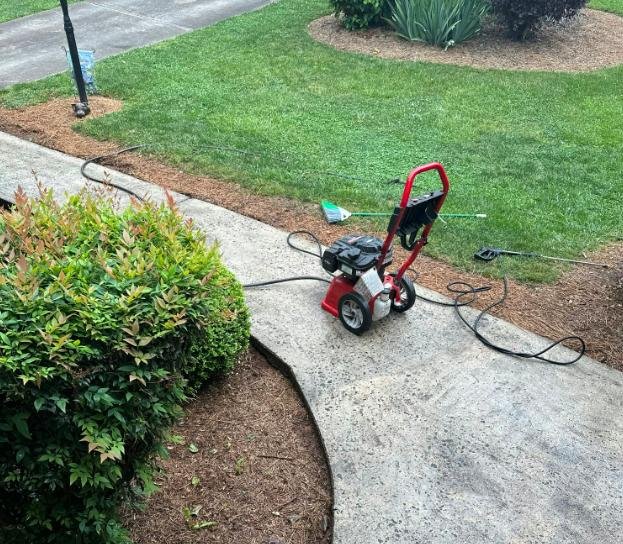
A pressure washer is a surface tool, and it is honest about that. It is at its best on concrete, paving slabs, rendered walls, plastic garden furniture and the grimy parts of a bin or a drain cover, where a season of dirt comes off faster than any brush could manage. Give it something flat and solid and it looks like excellent value.
It is the wrong tool for grass, for soft or painted timber, and for anything with a seal or a finish you want to keep intact. On a lawn it does not clean, it scars the ground; on a thin deck it lifts fibres instead of dirt.
Most of the ownership friction is not the cleaning, it is the hose. The machine needs an outdoor water supply, somewhere for the runoff to go, and a way to coil the high-pressure line without kinking it. Left connected and wound tight in a cold shed, the hose and the seals are the first parts to complain, long before anything mechanical gives trouble.
Pros:
- Cuts cleaning time on paving, steps and rendered walls.
- Useful across the year for bins, furniture and small patios.
- Compact footprint once the hose is stored separately.
Cons:
- Needs an outdoor water supply and a place for runoff.
- Heavy enough to be awkward on steps and stairs.
- Hoses and seals suffer when stored damp and unused.
The weak point of a pressure washer is rarely the pump; it is the hose you coiled wet in October and did not look at again until spring.
2. A Walk-Behind Lawn Mower: The Seasonal Workhorse
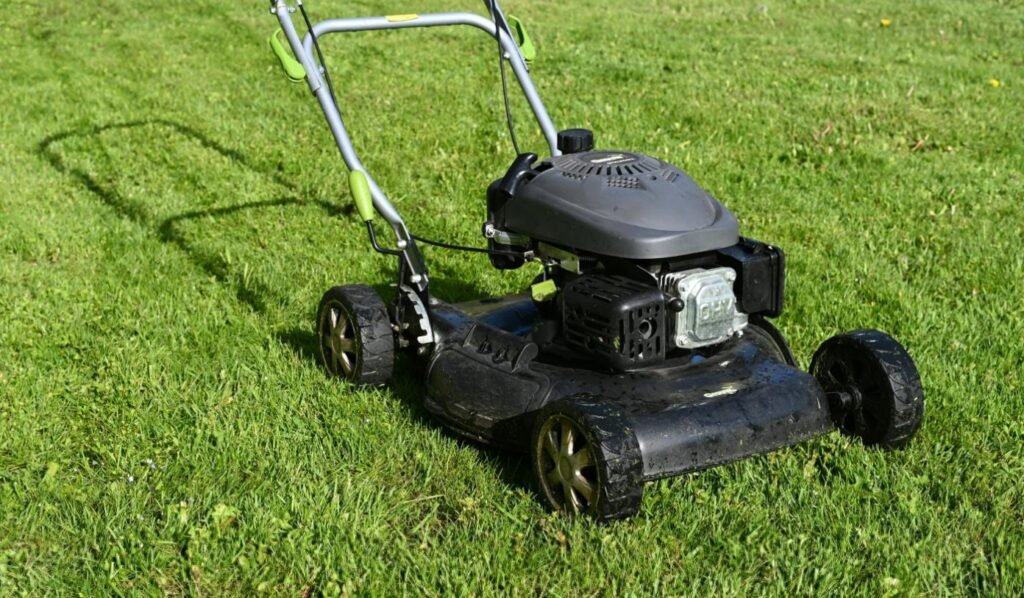
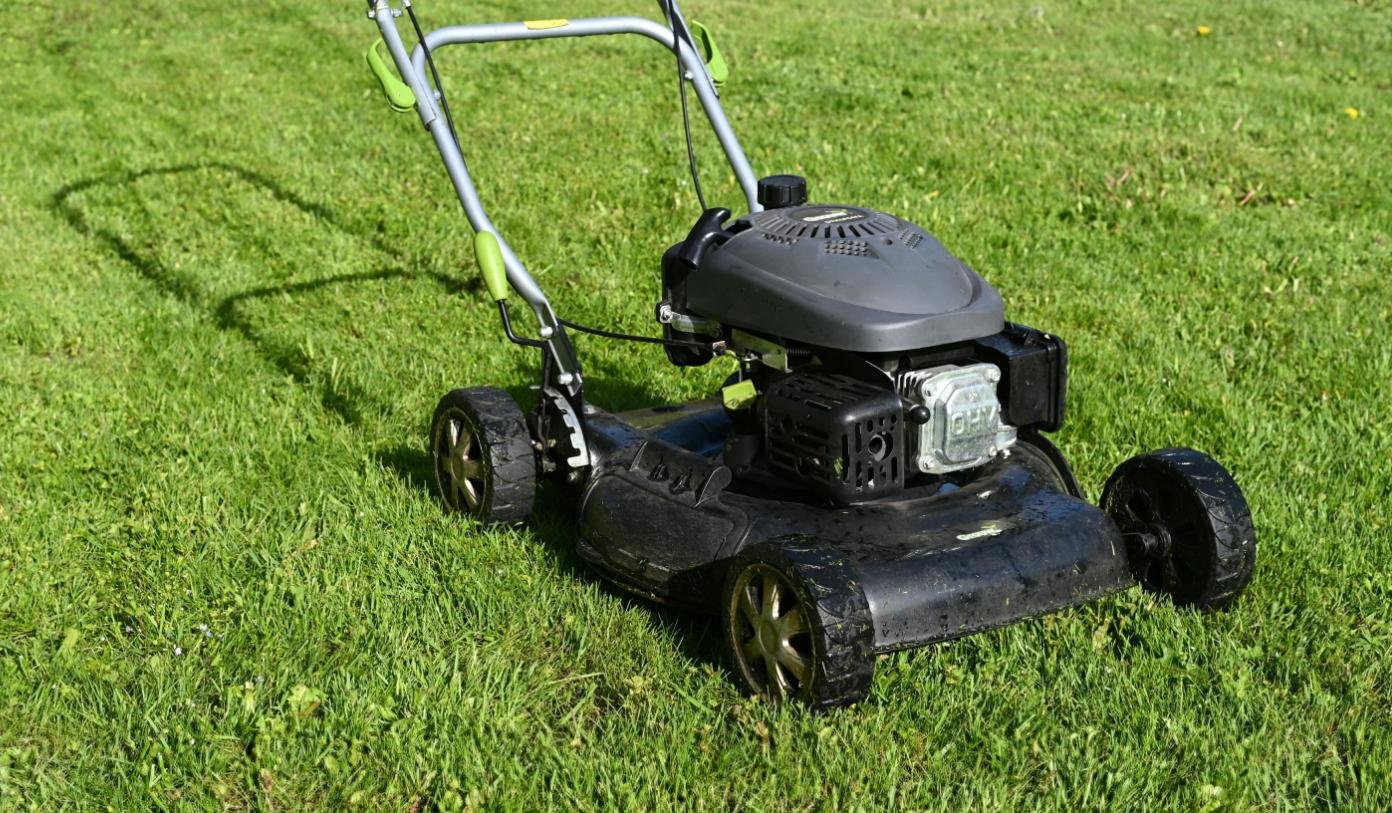
A walk-behind mower has one job and does it on a schedule. It is built for the ordinary domestic lawn that gets cut every week or two through the growing season, and it suits that work because the design is simple: a deck, a blade, a handle and very little else to go wrong. There is no docking station to site and no software to update.
Its year has a clear shape. The machine comes out in spring, works hard through summer, and then sits idle for months, and that idle stretch is where most of the damage happens.
Storage is the other half of ownership, because a mower takes floor space rather than shelf space. It needs a dry corner where the deck can stay off damp concrete, and a folding handle helps but does not make it small. The bulk, not the weight, is what makes people resent it by February.
Pros:
- Simple mechanics with few parts to fail.
- Folds down and stores against a garage wall.
- Handles uneven domestic lawns without fuss.
Cons:
- Needs clear floor space, not a shelf or a hook.
- Only useful for part of the year.
- Stored wet or fuelled over winter, it starts the season badly.
A mower that is cleaned and put away dry will see you right in spring; when one fails, the storage is usually the culprit rather than the machine.
3. A Robotic Mower: For Large Lawns And Long Weekends
A robotic mower is the only machine here that works while nobody is watching. It cuts little and often, which is what a large lawn needs, not a patch you finish in ten minutes.
Setup is what people underestimate: a boundary wire or mapping run, a charging base with power on site, and clear ground without obstacles. A small or fragmented lawn gives it nowhere to work, so a walk-behind wins there.
Pros:
- Cuts on a schedule without supervision.
- Suits a large lawn cut often.
- No fuel and no weekly chore.
Cons:
- Needs a boundary or mapping setup.
- A charging base needs power on site.
- Poor fit for small or divided lawns.
How They Compare Side By Side
| Machine | Main Job | Seasonal Use | Storage Footprint | Common Failure Point |
|---|---|---|---|---|
| Pressure Washer | Cleaning hard surfaces | Occasional, year-round | Compact but heavy to move | Hoses and seals perishing unused |
| Walk-Behind Mower | Cutting grass | Seasonal, warm months | Larger, needs floor space | Fuel and blade dulling over winter |
| Robotic Mower | Cuts grass unattended | Frequent, all season | Base and boundary on site | Boundary and docking trouble |
Three machines, three seasons of work and three separate storage problems.
Buying Checklist: What To Confirm Before You Buy
Ownership problems are decided on the day of purchase. Run through these six points.
- Rated surfaces – confirm it suits the surfaces you own.
- Storage footprint – measure the garage gap first.
- Power source – check it reaches the far end.
- Weight when lifting – can one person move it?
- Spare parts – hoses, seals and filters sold separately.
- Realistic annual use – count the weekends you really use.
Conclusion: Which Machine Your Outdoor Space Actually Needs
If you have grass, a walk-behind mower is the straightforward answer. If you have paving, a patio or plastic furniture that greens over every year, a pressure washer does a job nothing else does. A robotic mower comes later, when the lawn is big enough to pay back its setup.
What separates a good ownership experience from a frustrating one is storage, not specification. All three machines fail when nobody is using them, and all three recover from an hour of attention before the season starts. Buy for the job and the shelf, not the accessory.
Frequently Asked Questions
Do I need a pressure washer if I have a lawn mower?
No, because they do different jobs and neither one covers the other. A mower only deals with grass, while a pressure washer only deals with hard surfaces. If you own paving, a patio or plastic furniture, the washer handles work the mower cannot touch.
Is a walk-behind mower better than a robotic one for a small lawn?
For a small, simple lawn a walk-behind mower is usually the easier machine to own. It has no docking station to site and fewer parts to go wrong, and it stores against a wall. A robotic mower earns its place on a large lawn that needs frequent cutting, not on a patch you can finish in ten minutes.
Where should I store a pressure washer in winter?
Somewhere dry and frost-free, with the hose taken off the machine and the water drained. A shed that freezes will stiffen the hose and put the seals under stress. If the only option is a cold outbuilding, bring the hose and lance indoors and keep the body covered.
How often should outdoor power equipment be serviced?
Once a year is a reasonable baseline for anything with an engine, ideally at the end of its season rather than the start. Between those visits, the useful habits are cleaning, drying and checking the parts that wear. Equipment stored properly needs far less attention than equipment stored wet.
All three machines reward a dry shelf and one hour in autumn far more than they reward any accessory. If you are still planning the rest of the garden, see our home and garden guides and outdoors gear.